
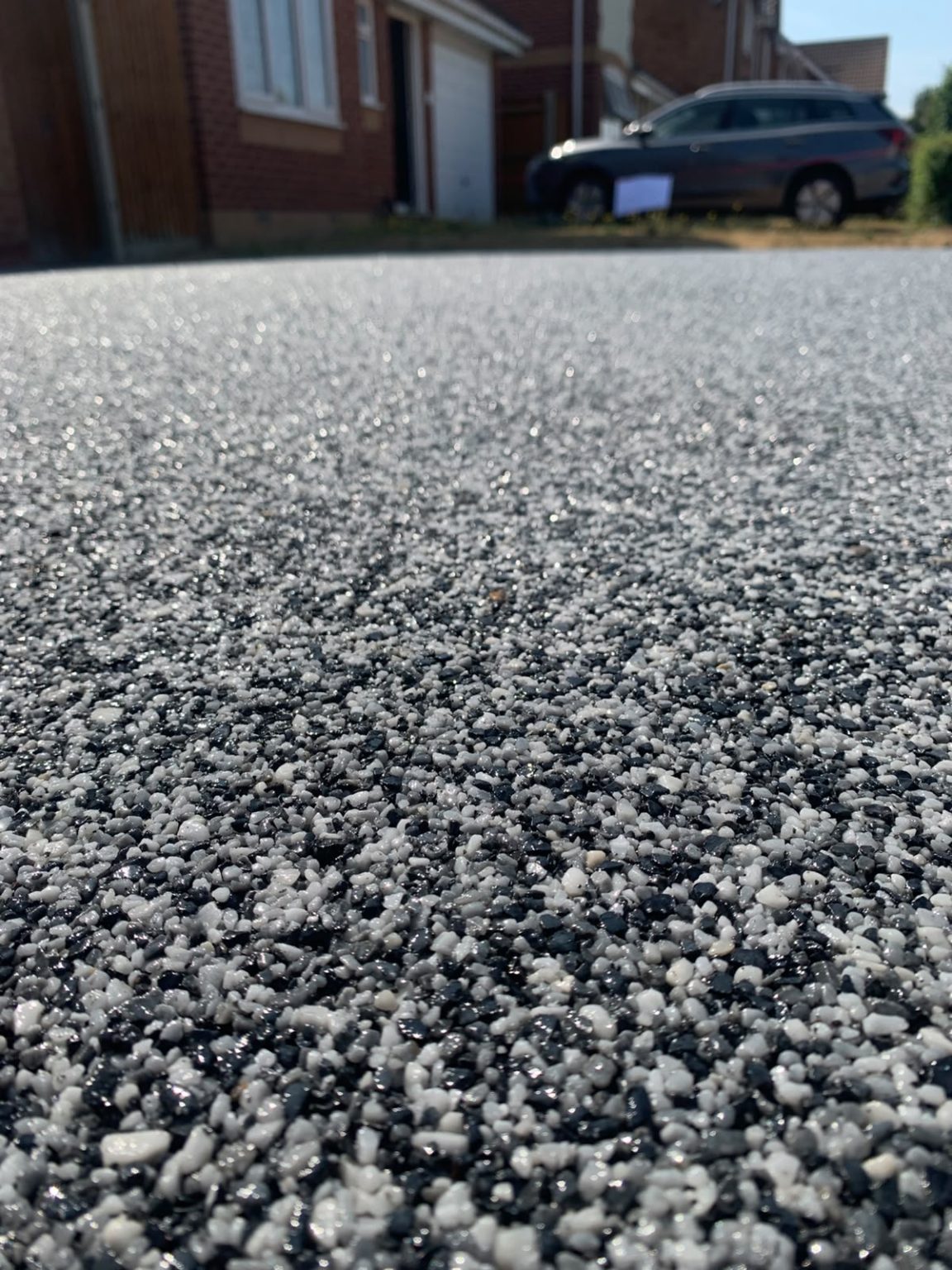
How Should You Clean a Resin Driveway?
If you are wondering how to clean a resin driveway without damaging it, the good news is that resin-bound surfacing is relatively straightforward to look after. The key is regular light maintenance rather than waiting until dirt, leaves, moss, algae, and vehicle marks have built up.
At Two Counties Resin, we recommend starting with the gentlest cleaning method that will do the job: sweep away loose debris, rinse with clean water, and only move on to detergent or pressure washing where necessary. Manufacturer aftercare guidance consistently recommends routine sweeping and periodic washing, while warning against excessive pressure and harsh chemicals.
We install and maintain resin driveways, resin pathways and resin patios across Dorset and Hampshire, so we also see what happens when a surface is left untreated for too long.
Sweeping
Regular sweeping is one of the simplest ways to keep a resin driveway looking clean. Use a reasonably stiff outdoor broom to remove leaves, dirt, seeds, twigs and other loose debris.
This is particularly important under trees and hedges. Damp leaves can break down on the surface, contribute to staining and create conditions in which moss or algae can establish themselves. Keeping organic matter off the driveway can also help prevent fine material accumulating in the voids of a permeable resin-bound surface. Government guidance on permeable driveways likewise recommends clearing leaves, mud and litter before they can clog the surface.
A quick sweep every few weeks can often prevent a much bigger cleaning job later.
Hosing Down
For ordinary dust, light dirt and pollen, a garden hose may be all that is required.
After sweeping, rinse the driveway evenly with clean water. Pay particular attention to areas beside walls, underneath parked vehicles and around planters where dirt can settle.
A properly constructed permeable resin-bound system is designed to allow water through the finished surface rather than simply sending it across the driveway. Keeping surface voids clear of silt and debris helps preserve that drainage performance.
If you are choosing a new installation, we can explain the surface and drainage construction when quoting for your resin driveway.
Why Does Regular Resin Driveway Cleaning Matter?
No driveway surface is completely maintenance-free.
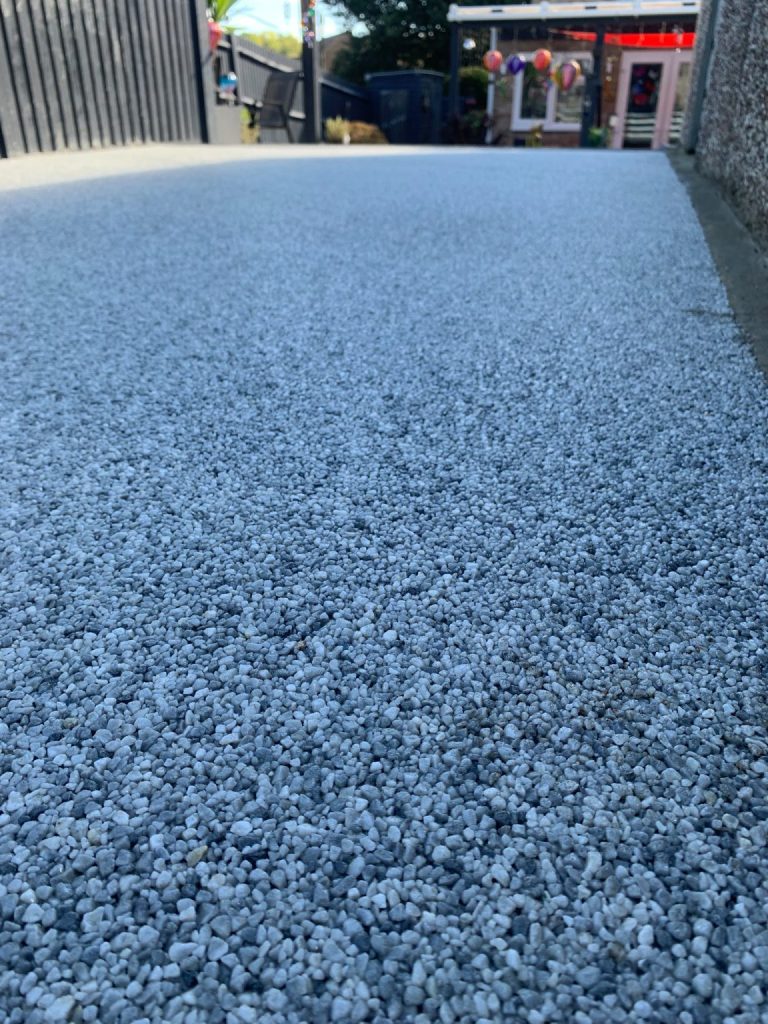
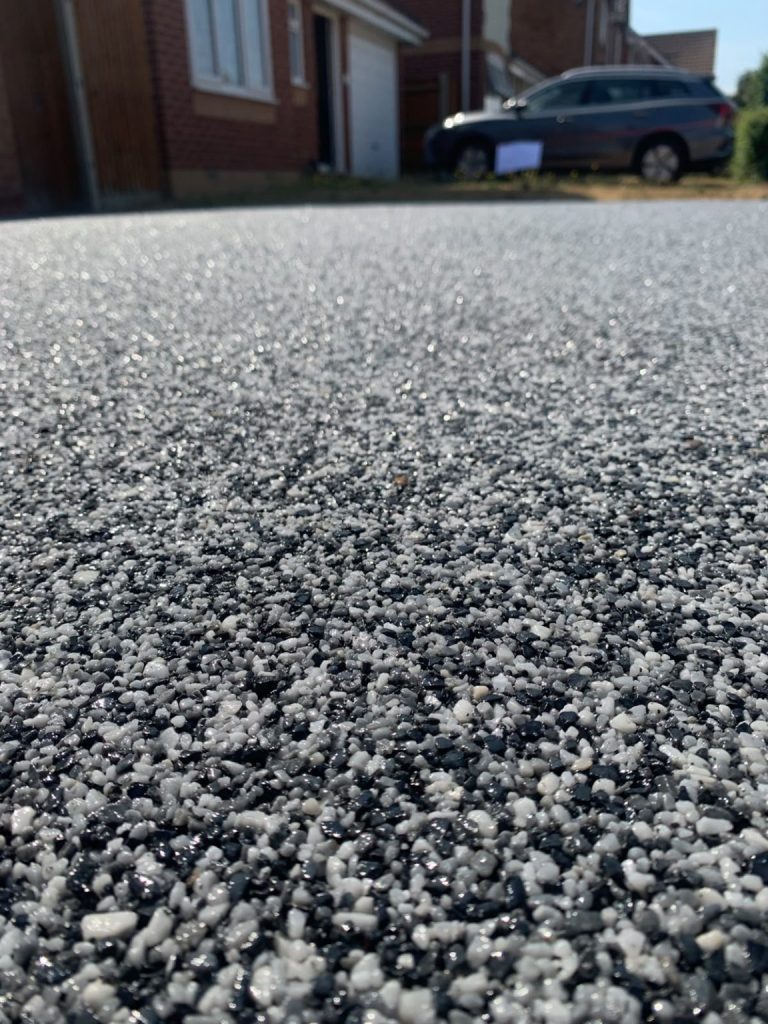
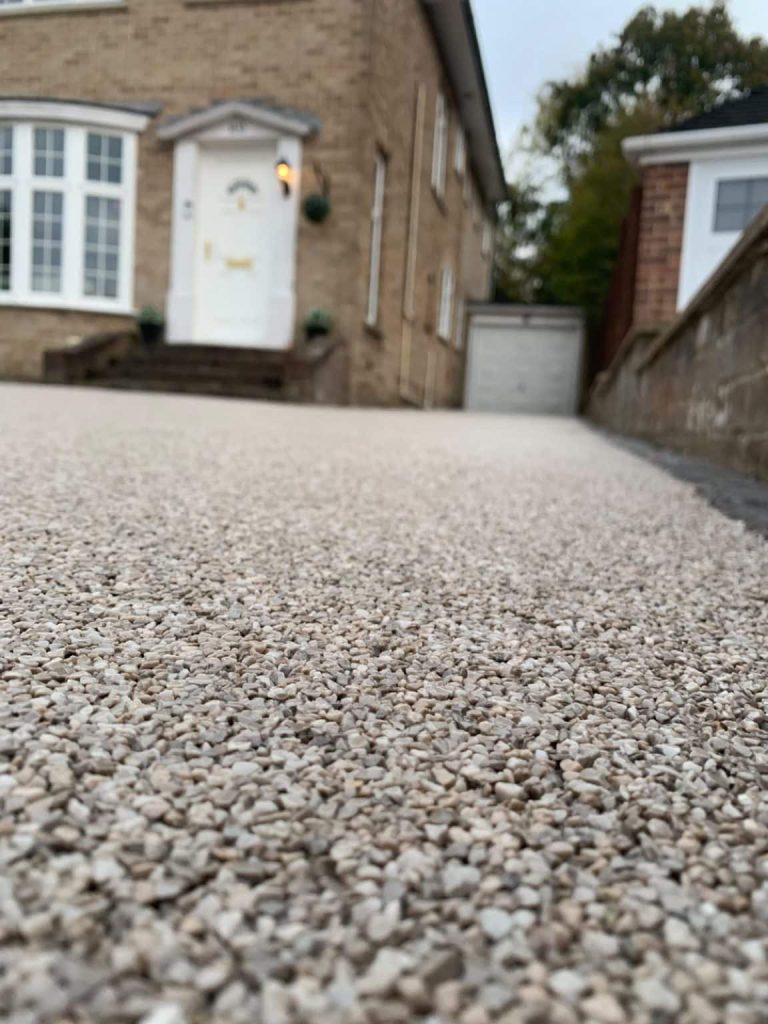
Resin bound is low maintenance, but dirt, airborne seeds, fallen leaves, vehicle residue and organic growth can still accumulate. Routine cleaning helps preserve its appearance, makes stains easier to deal with and reduces the chance of debris restricting a permeable surface.
Regular maintenance can be particularly worthwhile with lighter aggregate blends, where tyre marks, leaf staining and general grime may be more noticeable. If you are planning a new driveway, you can view our resin colour options before choosing your finish.
How Do You Clean a Resin Driveway Step by Step?
For routine home maintenance, we recommend this approach:
- Remove vehicles, pots and movable objects.
- Sweep away leaves, grit, soil and loose debris.
- Hose the surface with clean water.
- Treat localized dirt with a mild, preferably pH-neutral detergent suitable for the surface.
- Test any cleaning product on a small, inconspicuous area first.
- Agitate stubborn dirt gently with a suitable broom or brush.
- Rinse thoroughly with clean water.
- Check edges, drainage channels and shaded areas for remaining buildup.
Technical aftercare documents commonly advise prompt treatment of contamination and testing cleaning products on a small area before widespread use.
Avoid assuming that a product described as a “patio cleaner” is automatically suitable for resin.
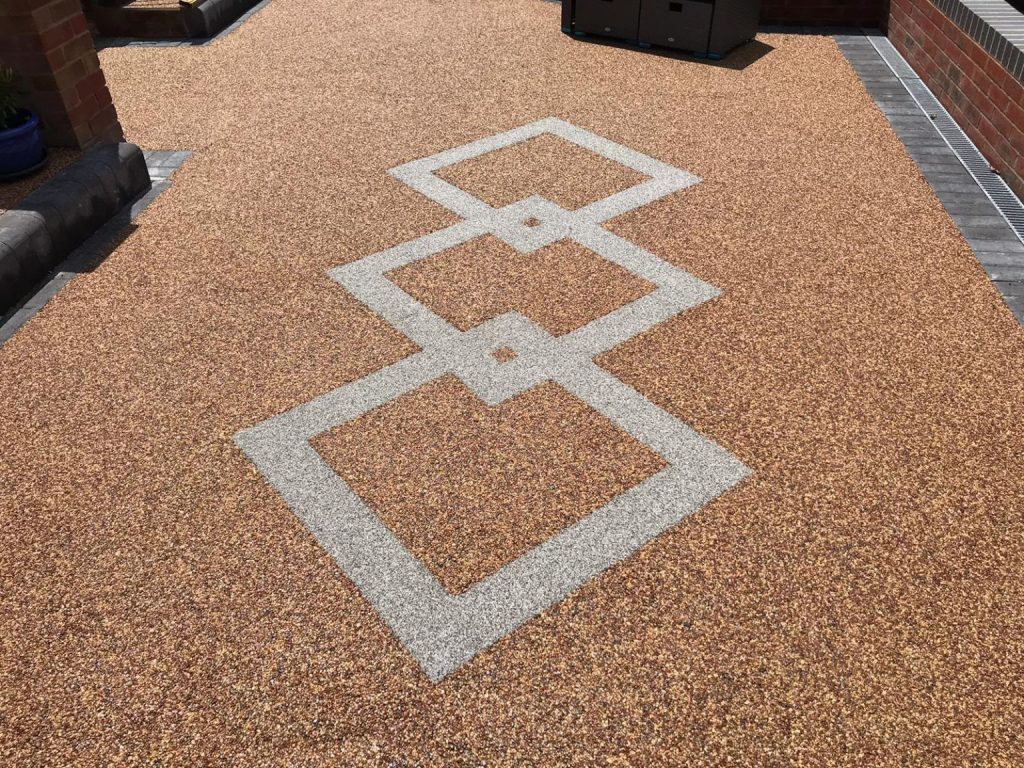
Can You Pressure Wash a Resin Driveway Safely?
In many cases, yes — but pressure washing must be done carefully.
Different resin systems and manufacturers specify different limits, so there is no single pressure setting that we would recommend for every driveway. Several technical guides allow pressure washing when cold water, a fan-style spray and adequate distance from the surface are used, while specifically warning against excessive pressure.
Our advice is conservative: use the lowest effective pressure, a wide fan spray rather than a concentrated jet, keep the lance moving and maintain a sensible distance from the surface.
Do not hold a concentrated jet against one spot, edges, cracks, damaged areas or places where aggregate is already loose. If the surface is deteriorating, have it assessed before pressure washing it.
What Cleaning Products Can You Use on Resin?
For ordinary dirt, start with clean water.
Where detergent is needed, use a mild cleaner that is suitable for resin-bound surfacing and follow its instructions. A mild detergent is commonly recommended for oil and general marks, and spot testing is sensible whenever you are introducing a new chemical to the surface.
We would avoid experimenting with strong bleach solutions, acids, paint thinners, solvents or aggressive chemical cleaners unless their compatibility with the particular resin system has been established.
Solvents are particularly important to avoid because manufacturer guidance warns that petrol and solvents can soften or damage resin binders.
How Should You Treat Moss, Algae, Weeds and Stains?
Treat Moss, Algae, or Weeds
Moss and algae are most likely to develop in damp or shaded areas where debris remains on the surface. Regular sweeping and cleaning can reduce the conditions that encourage growth.
If growth has established itself, remove as much loose material as possible before cleaning the area gently. We do not recommend automatically reaching for the strongest weed killer, bleach or acid available.
Weeds can occasionally appear even on resin-bound surfacing, particularly from wind-blown seeds settling into dirt at the surface. Resin-bound surfacing should therefore be described as weed resistant rather than weed proof.
For persistent growth, use only a treatment confirmed as suitable for your particular resin system, and test it discreetly first.
How Do You Remove Oil From a Resin Driveway?
Deal with oil, grease and vehicle-fluid spills as quickly as possible.
First absorb or blot as much of the spill as you can rather than spreading it across the driveway. A mild detergent and water may then be appropriate for the remaining residue. Technical care guidance consistently advises prompt removal because contaminants left in place can cause staining, while solvents can damage the binder.
For a large spill or an older stain, it is safer to ask for advice rather than repeatedly applying stronger chemicals.
What Should You Do About Leaves and Tree Debris?
Properties surrounded by mature trees may need more frequent sweeping during autumn.
Leaves, berries, flowers, seeds and soil should ideally be removed before they break down into damp organic matter. This reduces staining and helps prevent fine debris building up within a permeable surface.
If your driveway in Bournemouth, Poole, Christchurch or Ringwood sits beneath trees, a seasonal professional clean can be particularly useful.
Can You Use Salt on a Resin Driveway in Winter?
Some resin-bound system guidance permits salt for ice and frost, followed by thorough rinsing once freezing conditions have passed. Plastic tools are generally preferred to metal tools when clearing snow because sharp metal edges can damage the surface.
Because resin systems vary, we would still follow the aftercare instructions applicable to the specific installation rather than assuming every de-icing product is suitable.
How Often Should You Clean a Resin Driveway?
There is no universal cleaning interval because every property is different.
A sunny, open driveway with little surrounding vegetation may remain clean much longer than a shaded driveway underneath trees. Parking frequency, nearby soil, falling leaves, drainage and the colour of the aggregate also affect how quickly a surface looks dirty.
We recommend regular sweeping and dealing with spills as they occur, with deeper cleaning arranged according to the condition of the driveway rather than waiting for severe buildup.
For customers who would rather have us look after it, our resin driveway cleaning and maintenance service can be arranged as a:
- One-off clean
- Seasonal clean
- Clean every 3 months
- Clean every 6 months
We offer resin maintenance throughout Dorset and Hampshire, including Southampton, Eastleigh, Totton, Swanmore, Ferndown and Verwood.
How Can You Protect a Resin Driveway Long Term?
Protecting Your Investment Long Term
Cleaning is only one part of resin driveway maintenance.
Avoid dragging heavy objects across the surface, deal with oil or fuel spills promptly and take care when placing skips or other concentrated heavy loads on the driveway. Technical maintenance guidance recommends protecting resin surfaces from abnormal loads and sharp or dragging objects.
It is also worth inspecting the driveway occasionally for damaged edges, unusual movement or areas where water no longer appears to drain as expected.
Government guidance for permeable driveways specifically recommends removing leaves, mud and litter before they clog the surface and brushing away accumulated dirt to help retain drainage performance.
If your driveway needs more than an ordinary hose-down, our team can assess the condition and recommend an appropriate clean.
We are a family-run business established in 1984, serving homes across Dorset and Hampshire.
For a one-off resin clean, seasonal maintenance or a regular 3- or 6-month cleaning schedule, visit our resin maintenance service or contact Two Counties Resin.
Call 01202 028551 — open 8am–8pm, seven days a week.
Resin Driveway Cleaning FAQs
Can I pressure wash a resin driveway?
Usually, yes, provided the system is suitable and the washer is used carefully. Use low effective pressure, a broad fan spray and adequate distance rather than concentrating a powerful jet on one point. Manufacturer limits differ, so follow the guidance applicable to your installation.
Can I use bleach on a resin driveway?
We do not recommend treating household bleach as a universal resin cleaner. Cleaning guidance varies between resin systems, so use a compatible product and spot-test it first. Strong chemicals can create unnecessary risk of discoloration or binder damage.
How do I stop moss growing on resin?
Regularly remove leaves, seeds and organic debris, particularly from damp shaded areas. Periodic sweeping and appropriate washing reduce the material and moisture conditions in which moss and algae can become established.
Does cleaning help keep a resin driveway permeable?
Yes. On a permeable installation, removing dirt, leaves and fine material helps prevent surface voids from becoming obstructed. Government permeable-driveway guidance specifically recommends regular debris removal and brushing for this reason.